Wednesday, June 24, 2015

Steak Night

Burk Ridge Farms, Whatcom Count100% Grass Fed Porterhouse
From Rainshadow Meats, Pioneer Square
Phil rode his bike home from work last Saturday.  He had a couple of hours to put in at the office, and it was a glorious, sunny day.  He could ride the ferry across the Sound, and peddle a few miles home, but that’s what mortals do.  Phil takes the overland route via Redmond, Tacoma, Gorst, Bremerton, Silverdale, and Poulsbo for a 100+ miles in the saddle.  If past is prologue, he will arrive just in time for cocktails, legs speckled in chain grease and road dirt (which is sexier than it sounds), claim he didn’t really exert himself (which is just as annoying as it sounds), and then proclaim he is starving.  Ah. For this I have a plan.  It involves steak.  Really, really good steak.
Let’s take a step back here and talk about meat. 
We’d rather have a brilliant, locally sourced, dry-aged, 100% grass-fed steak every couple of months, than something mediocre more often. Lucky for all of us, there are great local places to buy meat.  There are small farms where, if you like, you can shake the hand of the rancher and observe the animals that will one day become your dinner, like Seabreeze Farm on Vashon Island, Shorts Family Farm in Chumacum, or Hey Day Farms on Bainbridge Island.  
SeaBreeze Farm, Vashon Island Uber Dry-Aged Porterhouse
There are also full-service artisan butcher shops sourcing whole local animals, using the nose-to-tail philosophy, so that no part of the animal is wasted, like The Swinery and Rainshadow Meats. 
 Boneless Strip, Harlow Cattle Company, Spanaway, Washington 

We frequently shop at Rainshadow Meats. In addition to beef, pork, chicken, and occasionally duck, goose, turkey, and rabbit, they smoke bacon, make sausages, pate, killer meatballs, duck confit, and more.

Back to tonight's steak.  The butcher cut a steak to Phil’s specifications.  Whether it’s a côte de boeuf, strip steak, or porterhouse, Phil wants it 1-3/4 inches thick.  Why?  Because we like it that way.  One of many great things about having a relationship with a local butcher is that you get what you like, not what’s been mass-packaged, squished between Styrofoam and shrink wrap. That’s no way to splurge.

As soon as you get home with your precious bundle of meaty goodness, sprinkle 1 teaspoon sea salt per pound evenly over both sides of the steak.  Cover and refrigerate at least an hour, and preferably 24 hours.

Côte de Boeuf, Strawberry Mountain Farm, John Day, Oregon 


You can pan-fry, broil, or even deep fry a steak, marinate it, coat it in a rub, etc., but why would you?  You’ve just paid upwards of $60 for about 2-1/2 pounds of exceptional beef.  Don't you want to taste it? I’m in bed with the Tuscans on steak prep.  Bistecca alla Fiorentina.  
Wait, something is missing.  A drink!  It's summer.  The sun is shining.  Let's make daiquiris.


Daiquiri Rebelde
1/2 oz fresh lime juice
1/2 oz simple syrup (1:1 raw sugar to water)
2 - 3 fresh mint leaves, plus 1 for garnish
3 oz Bull Run Distiller's Pacific White Rum
Combine all ingredients in shaker with ice, shake and strain into chilled cocktail glass, up or on the rocks. Garnish with mint leaf.
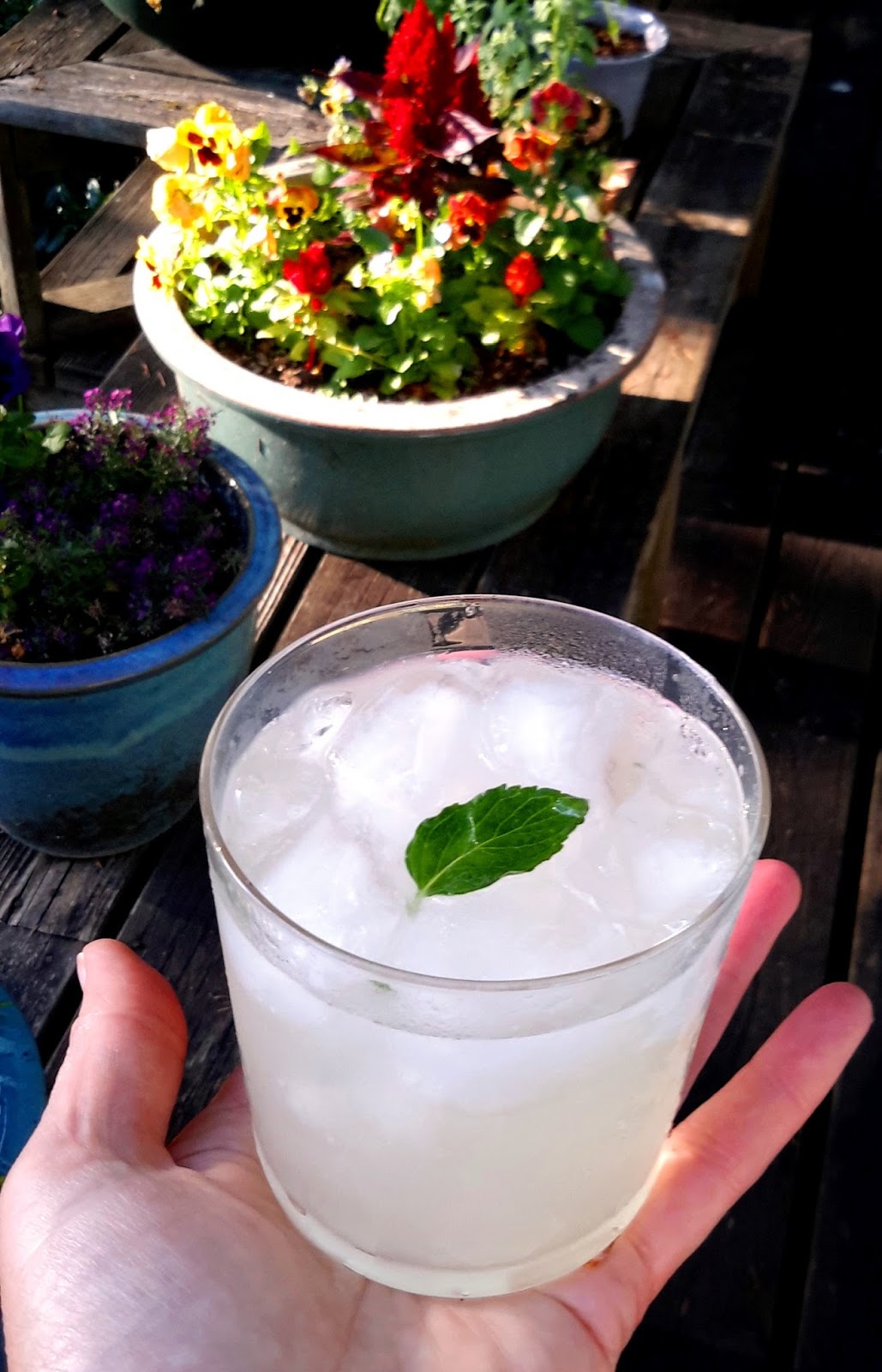
Drink me now. 


On to cooking.  I turn you over to Phil.  Grill man, take it away . . . 
Refer to Heather's previous post on smoking chicken for how to prepare a gas grill. 

To sum up: soak some chips (I like mesquite for steak) for half hour beforehand. Wrap chips in foil, poke a few holes in foil. Fire up the gas grill. If you've got the time, talent, and inclination, use charcoal. I have none of the above. 

When grill is good ‘n’ hot, add chips.  When wood is smoking, slap that steak on the heat. I did this steak for four minutes each side. Then transfer to cool side of the grill (i.e., turn off all burners but one and move the steak over there). Grill five minutes more each side. If you like a hint of rosemary, as the Tuscans do, take a generous sprig, dip it in olive oil, and brush the steak before each turn.

I know there are professionals who say turn only once and never fuss over the meat. I envy those people. They are people who have staff to start their Argentine bonfire and who remain conveniently off-camera so you don’t know how much work or time is involved. But I digress.

While the steak is grilling, peel a large clove of garlic and cut it in half.  

We eat steak rare, and so remove it from the grill when the internal temperature registers 120-degrees on an instant read thermometer.  With a little experimentation you'll find the temperature that works for you.

Please note that your mileage will inevitably vary from steak to steak. A fattier piece will flare up more, resulting in more char. (And oh, how we can tell you some horror stories).  Marbling affects how fast the meat cooks.  In other words, keep an eye on your steak.

I think we (the collective we) are uncomfortable with the idea that the meat is still cooking while it rests. If you leave it on the grill until it “looks right” it will probably be overdone.  At first I thought this steak was underdone, but it was perfect. Of course, we like our meat bloody. 


I now turn you back over to Long Suffering Wife. . . 
Remove the steak from the grill and immediately rub both sides vigorously with the cut sides of the garlic.  Tent steak with foil and REST FOR 10 MINUTES. Yes, I shouted that.
Remove foil.  If your steak has a bone, cut around the bone to release the meat.  Nibble delicious nubbins of beef from bone.  Share with your spouse/partner. Slice steak across the grain into approximately ½-inch slices.  Plate what you will be eating.  Embellish with a squirt of fresh lemon juice and a drizzle of extra-virgin olive oil.
 Mangia tutti.

When you approach the tableside with these intimidating monsters and carve them up, your guests will tremble with awe, basking in your magnificence and casual impertinence.
  -- Anthony Bourdain
Sliced Porterhouse with a Simple Salad of 
Heirloom Tomato, Crusty Bread, Fresh Basil, Olive Oil, and Sea Salt 


The last word:  We get three dinners for two out of a large porterhouse steak.  What to do with leftovers? They're excellent cold on a salad with a red wine vinaigrette, or how about the steak tacos of your dreams?


Monday, June 8, 2015

A Summer (Strawberry) Romance

   Hello, gorgeous

There's a line in a song that goes something like "How can I miss you if you don't go away?" After a winter of abstinence, there is heightened pleasure in eating fruits and vegetables just pulled from the ground or plucked from the vine.

Last week I sat in my car at the Day Road farm stand, a flat of Bainbridge Island Farms strawberries on the seat beside me. I picked one up and bit into thick, garnet flesh, shot through with juice impossibly sweet. I ate another, eyes closed, my head resting against the seat. I may have moaned. Just a little.

Heading home, I ate berries one by one, tossing the rough green tops out the sunroof. Hedonistic pleasure, parceled in tiny jewel-toned bites.  

In winter when our farms lie fallow, I cook for comfort with the corn, tomatoes, peppers, blueberries, raspberries, and strawberries tucked in my freezer when at their peak, and wait patiently for this June day.
What to do with this bounty?  
Make a plan before going home.

The shelf life of local berries is less than 24 hours. After eating as many as you can out of the box without making yourself ill, try these recipes to extend the love affair.

As simple as it gets. Three ingredients become more than the sum of their parts with fresh berries, good sour cream (the only ingredients should be cream and enzymes), and dark muscovado sugar. Dip berry in sour cream, dip again in sugar. Eat.  

Of course you're going to make freezer jam. No cooking, no sterilizing jars, no lengthy prep. Buy a box of fruit pectin, such as Sure Jell, a bag of sugar, and a lemon.  (Some recipes call for a tablespoon or two of lemon juice, others don't. Lemon cuts through a bit of the sugar, so I use it.) Follow the directions for freezer jam in the pectin package. Spend 45 minutes washing, hulling, crushing, stirring and scooping jam into jars. With that wee effort comes months of the freshest and best tasting jam on the planet, with plenty left over for much sought-after hostess gifts.

Next up:  Pop Tarts!
Your friends and family will believe you have super powers if you use your homemade strawberry jam in pop tarts. Here's the recipe from Bon Appetit: Strawberry Pop Tarts Make a double batch and freeze them. The recipe says they freeze for up to a week. Balderdash. I've frozen them for a month and they've been perfect. You can cut them in any shape or size. Just don't over fill with jam, and seal the edges well. I used a 2 x 2 ravioli stamp for the pop tarts in the photo above, but I've also used a heart-shaped cookie cutter, or gone free-form with a pastry wheel or knife. With these darlings on hand, you're 30 minutes away from an elegant little dessert any time. 


And now, the moment you've been waiting for: Ice Cream!  
Roasted Strawberry, Balsamic, and Fresh Rosemary Ice Cream 

I first had a version of this ice cream at Salt & Straw in Portland. It was assertive, potent with vinegar.  I liked it, but it wasn't something I'd eat a quart of. I wanted a more nuanced approach. After trying several online versions, I went back to my own ice cream template and tweaked it. The final result is ultra-smooth, with a subtle back note of rosemary and balsamic. Roasting the strawberries gives them a dark, mellow taste.  All grown up like.


Roasted Strawberry Balsamic Rosemary Ice Cream
Yield 1.5 quarts

1 pint strawberries
2 tablespoons granulated sugar
1/8 cup balsamic vinegar    
1 tablespoon vodka, cherry heering, Luxardo cherry liquor, or kirsch (optional, but recommended)

2 cups heavy cream
1/2 cup milk
3/4 cup granulated sugar   
1, 4-inch sprig of fresh rosemary
pinch of sea salt 
3 egg yolks 
1 teaspoon pure vanilla extract

Preheat oven to 425°. Rinse and hull strawberries. Place them on a baking sheet lined with foil. Sprinkle with 2 tablespoons of sugar and balsamic vinegar and macerate for about 15 minutes. Roast in oven for 10-15 minutes until soft, but not mushy.

Cool, then transfer berries and accumulated syrup, along with 1 tablespoon liquor (if using) to a bowl, cover and refrigerate.  

Whisk egg yolks in a bowl until frothy. Combine cream, milk, sugar, salt and rosemary sprig in heavy saucepan. Heat cream mixture over medium heat on the stove until temperature reaches 170° on an instant-read digital thermometer. Slowly drizzle the warm cream mixture into the eggs, whisking constantly. Return egg and cream mixture to the pan and cook over medium heat, whisking constantly, until mixture reaches 180°. Do not let the mixture boil or you'll get sweet scrambled eggs.  Yuck.

Remove and discard rosemary sprig. Strain custard through a mesh sieve into a 4-cup glass Pyrek measuring cup, or a bowl. Whisk in vanilla extract.  Cover and refrigerate for at least four hours or overnight.

Use an immersion blender, or a stand blender and puree strawberry mixture. Pour strawberry mixture and custard into ice cream maker and process according to manufacturer’s directions. Transfer ice cream to glass, plastic, or paper container, cover tightly and freeze until firm.
Ice Cream Base and Roasted Strawberries

Ice cream is incredibly simple to make, and the results are so good. When you're not up to making your own, try the ice cream at Mora, Molly Moon, or Salt & Straw. They use excellent ingredients and don't add junk found in even premium grocery store ice cream. Read the labels.  

All that cooking has made me thirsty. Time to cool off with a fresh strawberry cocktail.
Here's a dangerously good recipe from Imbibe Magazine:  Kentucky Daiquiri.

One bit of advice when buying strawberries. While berries are in season, the Day Road farm stand is open every day at 9:00am, BUT they don't pick every day and berries sell out fast. Be in line at 8:50am. Trust me, it's worth it if you have to try more than once to score your own flat.  


Market Watch - What's In Season Now

My Saturday Market Bag (Clockwise from Bottom Left)
Yokatta Na, Four Varieties of Snap Peas, New Red Potatoes, Italian Parsley, Tomatoes, Garlic Scapes, Chinese Garlic, Wild Mountain Spinach, Red Oak Lettuce, Yellow Summer Squash, Manila Clams, Spouted Broccoli, Spring Onions, Cucumber

A sunny Saturday morning on Bainbridge Island. Arguably the best day of the week, in one of the most beautiful places on earth. My day starts with a 7:00am swim with friends. Coach April works us hard, and during the last tough set all I can think about is the prospect of breakfast. A quick shower and I'm at Farmer's Market when the opening bell rings at 9:00am. The vendors are accustomed to the sight of me. I'm a fright. Goggle-eyed, wet hair, essence of chlorine permeating the air around me. Did you have a good swim, they ask? 

The farms are in full swing now, with overflowing displays, and produce even I haven't seen before, such as:
Wild mountain purple spinach and green spinach
You eat stems and leaves of yokatta na  
They taste similar to bok choy with the zip of mustard greens
Check out the peas - There are purple ones!

Shopping complete, I dash home, grab knife, cutting board, whisk, and pan. Saute yokatta na, snap peas and spring onion in butter. Transfer to bowl. Top with shredded wild mountain spinach and red oak lettuce. Drizzle with olive oil and white wine vinegar. Toss around a bit. Top with French omelette and tomato chunks. Sea salt and pepper.
Swimmer's Breakfast
Now, what's for dinner later?  

The friendly folks at Baywater Shellfish had set me up with an oyster to slurp off the shell while they bagged my fresh clams.  Shuck me an oyster and I'll follow you anywhere. They'll be at Farmer's Market every week. This makes me happy, as I need a fix to hold me over until my monthly oyster share from the Puget Sound Restoration Fund.
 
  I had garlic and garlic scapes from Laughing Crow Farm. . .
Add more spring onions, spinach, yokatta na, parsley, and a few other ingredients on hand and a feast of steamed clams came together in a snap.
Phil and I grabbed a baguette from Pain D'amore to soak up the sauce, a bottle of rosé from Bainbridge Vineyards to wash it down, and headed to the deck to watch the sunset.  
Bainbridge Vineyards is offering free wine tasting to island residents 
on June 13th and 14th  
Stop by the tasting room from noon - 5:00pm 
and try their certified organic wines from 100% island-grown grapes
Yup 
That's the view from our deck

Did I mention life here is really, really good?  

Monday, May 25, 2015

Asparagus – Esculent of Courtesans and Kings. And You and Me.

BI Farms Blanched & Chilled Asparagus

Humans have been devouring asparagus for over 2,000 years.  In her entertaining book How Carrots Won the Trojan War: Curious (but True) Stories of Common Vegetables, Rebecca Rupp explains the long and winding path of asparagus from ancient Greece and Rome to your kitchen. 
Given the popularity of asparagus over ages and across cultures, it is not surprising that sex is involved.  Pliny the Elder, 2nd century Arabic love manuals, European Renaissance bridegrooms, and the modern day Vegetarian Society, all tout asparagus as your go-to vegetable for a vigorous love life. 

Madame de Pompadour so loved asparagus that she created the eponymous dish still eaten today, Asperges a lá Pompador, made with eggs, butter, nutmeg, and lemon.  Madame was King Louis the XV's favorite mistress and considered one of the three most powerful women of the 18th century.  She was involved in designing the Place de la Concorde in Paris, in court affairs, and foreign policy.
Pretty Madame de P. Ponders, Perhaps on Asparagus
The first asparagus of the season hit the Day Road Farmstand on May 15th and the clock is ticking.  You have only a couple weeks to eat your fill.
Try one of the recipes below to enjoy the bright, fresh taste of local asparagus, and perhaps bring a little extra zip to your love life. Who am I to argue with the wisdom of ages?
Asparagus with Boursin, Mustard, and Prosciutto

24 asparagus spears
4 ounces Boursin cheese, softened
1/4 pound thinly sliced prosciutto
1/8 cup mustard

Bring a large pot of salted water to boil and cook asparagus until crisp-tender, about 1.5 minutes. Transfer asparagus to a bowl of ice water and move it around a bit with your hands until chilled through. The asparagus, that is, not your hands.  :-)  Transfer asparagus to paper towels or a clean dish towel to dry.

Cut 1 slice of prosciutto lengthwise into 1-inch strips and spread each strip with about 1/2 teaspoon Boursin. Spread about 1/8 teaspoon mustard over the Boursin and wrap each strip in a spiral around an asparagus spear.

Make more hors d'oeuvres with the remaining prosciutto, Boursin, mustard, and asparagus spears in the same manner. Cover and chill.  Can be made up to 6 hours in advance.  Before serving, drizzle with olive oil. Serve with slices of chilled cantaloupe.
Charred Asparagus with Shallots, 
Thyme, and Chive Blossoms
1 bunch asparagus
2 tablespoons each butter, olive oil, plus extra oil for finishing
1 large shallot, peeled and chopped
1 large garlic clove, peeled and minced
2 teaspoons fresh thyme leaves
1/2 lemon
chive blossoms (optional)

Heat dry iron skillet over medium-high heat until just smoking.  Add asparagus and use tongs to roll around asparagus until charred in spots, about two minutes. Transfer to a plate. 

Reduce heat to medium low.  Carefully rinse pan with hot water (it will sizzle). 

Return pan to stove.  Add butter and olive oil to skillet along with thyme leaves, chopped shallot, and garlic.  Saute until shallots are soft, about 2 minutes.  Do not let garlic brown.  

Return asparagus to pan, season with salt and pepper, drizzle on a little more olive oil, toss to combine and heat asparagus through.  Transfer to plate, drizzle with lemon juice, a little more olive oil, and garnish with chive blossoms.

Fresh Asparagus Soup
Friends of the Farms was kind enough to include my recipe in their cookbook:

6 cups water
1/4 teaspoon crumbled saffron threads
1/3 cup shelled pistachios
3 1/2 pounds asparagus
1 large potato (preferably yukon gold)
1/4 cup butter
Handful of fresh flat-leafed parsley leaves chopped
Salt and pepper
Edible flowers for garnish (such as borage or pansy)

In a small saucepan bring 1/2 cup water to a boil and remove pan from heat.
Stir in saffron and steep, stirring occasionally, 15 minutes.

Toast nuts in a heavy skillet over moderate heat, stirring until fragrant.  Remove from heat.  When nuts are cool enough to handle, chop course. 

Cut asparagus spears into 2-inch pieces, reserving tips separately.
Have ready a large bowl of ice water.

Bring a large saucepan of boiling salted water to a boil and blanch asparagus tips 1 minute, or until crisp-tender, and transfer with a slotted spoon to ice water to stop cooking.  Drain tips well.

Peel potato and cut enough into 1/2-inch cubes.

In a 4-quart heavy bottom pot, sauté asparagus stalks in butter over moderate heat until beginning to soften, about 3 minutes. Stir in potato, saffron infusion, and 4 cups water and simmer, covered, until vegetables are very tender but not falling apart, about 20 minutes.

In a blender puree mixture in batches until smooth.  In pot, stir together puree and enough of remaining broth to reach desired consistency. Add half of asparagus tips and bring soup to a simmer. While soup is heating, chop parsley. Season soup with pepper and salt.

Ladle soup into bowls and top with nuts, remaining asparagus tips, parsley, and flowers. 

And now for something completely different:
 Asparagus Ice Cream 
I first heard of asparagus ice cream in the outstanding new documentary series Chef's Table in an episode with Dan Barber of Blue Hill at Stone Barns in New York.  When a miscommunication led to the restaurant having too much asparagus, Barber decided to put it in every dish on the menu that night, even the ice cream. A gutsy idea that led Jonathan Gold of the LA Times to describe Blue Hill as the new epitome of farm to table dining.  
I don't know about you, but I'm starting to feel a little frisky.


Monday, May 18, 2015

Rosemary Chicken  

Brine it, smoke it, then set it on fire. I'm not kidding.

The first time I saw chickens at HeyDay Farms I gaped.  They were cavorting.  Running, flapping, jumping, squawking.  I did not know that chickens behaved in such a raucous manner. 

If you buy a local chicken and properly prepare it, it will be the only thing you eat that "tastes like chicken." 

I've purchased chickens from HeyDay Farms and Butler Green Farms on Bainbridge Island, and the Farm Store at Bay Hay & Feed sells chicken from Spring Rain Farm in Chimacum. 

HeyDay Farm chickens were on sale recently, Sunday's weather was glorious, and we were home all day working in the yard.  Time to smoke a chicken.

How to Prepare a Fantastic Chicken

Brine the Bird  
Do. Not. Skip. This. Step. It is essential to a flavorful, moist bird.  There are gazillions of brine options, like this one from Michael Ruhlman. 

I use the most basic brine for rosemary chicken.  In a large pot, dissolve 1/2 cup kosher salt in 4 quarts of cold water.  Rinse chicken under cool water inside and out, and submerge in pot.  Refrigerate at least 6 hours, and up to 24. 

Prep for Chicken and Gas Grill Smoking
Step 1:  Remove chicken from brine and place on a rack in a roasting pan breast side up. The rack prevents the chicken from touching the pan, as you will be cooking with indirect heat. Pour about an inch of water in the pan as an added heat barrier.  You can also add a little white wine or dry vermouth to the pan for additional flavor.

Step 2: Put some aromatics in the chicken cavity.  Pick your flavor profile and don't over-fill.  Try chunks of leek or onion, and a couple of smashed garlic cloves.  If you like, add fresh herbs like sage, rosemary, thyme, parsley, or tarragon, and/or a wedge or two of citrus such as lemon, lime, or orange. Use kitchen twine to tie the legs together to make a tidier chicken bundle. 

Step 3: Soak wood chips for 20-30 minutes. Wood chips are readily available in grocery and hardware stores. We used hickory this time. We’ve also used apple and cherry chips. (Don't use mesquite, it is too harsh for a long smoking process like this.)

Smoke the Chicken
Total smoking time: approximately 2 hours for a 5 lb. chicken.  
Step 1: Heat gas grill to 325-350 degrees. There are those who believe meat must be cooked over charcoal.  Come by some day and we'll prove you wrong, but if you prefer a charcoal grill, peace be with you.
Step 2: Wrap soaked wood chips loosely in aluminum foil and puncture in a couple of places to allow smoke to escape. Place packet near one of the side gas jets to warm. Meanwhile, soak more chips, as you will be adding a packet every half hour for the duration of smoking.
Step 3: When wood packet is smoking, place chicken on grill and turn off middle burner (or however your grill is configured). The objective is indirect heat, so no heat right under the bird.
Step 4: Close the grill lid and monitor the grill temperature. With too little heat the wood packet will stop smoking, too much and it will burn up too quickly. Adjust as needed.
Step 5: After one half hour turn chicken over with tongs so the breast side is now down. Don't use a fork to do this; you don't want to pierce the skin. Replace wood chip packet. Repeat flipping over the chicken and replacing the wood chip packet every half hour until the bird is cooked to 155 degrees. A digital probe thermometer is a kitchen must-have. They are inexpensive and the only way to be certain food is cooked to the desired temperature.
Step 6:  Cover chicken with a bunch of freshly cut rosemary sprigs. 

Close grill lid.  Check after about 10 minutes.  The rosemary should be wilted and starting to ash.
Step 7:  Here's the super fun part.  Turn off the gas, open the grill, strike a match and stand back …

I wish this was on Smell-O-Vision

When the fire is completely out, use a pastry brush and brush off the ash.  Admire your creation, then transfer bird to a cutting board and tent with foil.
Step 8:  This is another critical step.  Let chicken rest for 15 minutes.  I know this is hard, because it smells so freaking good, but if you aren't patient all the glorious juices will end up on your cutting board and not in your tummy.

What goes with rosemary chicken?  Everything. But what you want to eat right now is Karen Selvar's local asparagus. It will make you swoon.  Grill it, steam it, broil it, eat it out of hand. (Next week I'll have much more on how to enjoy this local treat.) The season is painfully short, so get to the Day Road Farmstand Monday and Wednesday from 9:00am to 2:00pm.  

When tomatoes are in season a salad of tomato chunks, torn crusty bread, fresh basil and a lot of olive oil and sea salt is great with chicken.  Until then, white beans and greens are an homage to Tuscany.  

Use leftover rosemary chicken on a sandwich with a slice of bacon and a pile of arugula. We also use it in spinach and smoked chicken risotto, or make a dinner salad with nutty grains like farro or einkorn and vegetables with a lemon tahini vinaigrette.  
C'mon Baby, Light Your Fire.

Friday, May 1, 2015

A Girl And Her Greens


I love greens.  REALLY love them.  I eat them for breakfast, lunch, and dinner.  I eat them raw, grilled, steamed, stir fried, pureed in smoothies, and coated in olive oil and roasted.  They go in pots of white beans or chickpeas, minestrone, get baked in casseroles, and are transformed into a glorious green lasagna.  More on that lasagna later. 

After a winter of little variety in produce, I come unraveled at the sight of bright, tender, green vegetables at the Bainbridge Farmers' Market. 

Raab at Butler Green Farms at Farmer's Market

Last week my market bag spilled over with baby arugula, sprouted broccoli, speckled bib lettuce, raab, bok choy, spinach, and two less common offerings – sproutini (the young shoots from Brussels sprouts) from Persephone Farms and vitamin greens from Butler Green Farms. 

Vitamin Greens and Bok Choy
'
Sproutini

I snacked on sproutini in the car on the way home.  It was shockingly sweet and mild.  Not a hint of bite or bitterness.  Saturday night it went on the grill, doused with olive oil, sprinkled with salt and pepper.  When it had wilted and taken on a little smoky flavor, I drizzled on white balsamic vinegar infused with grapefruit from The Lively Olive in Port Townsend, and shaved on lemon zest.    


What little remained became a throw-together 10-minute lunch.  Leftover roast chicken and cooked pasta from earlier in the week went into a saucepan with chopped sproutini, a half-cup of water, a tablespoon of butter, a grating of Parmesan cheese, salt, and pepper.  I heated it through and dove in.

Vitamin greens are similar to bok choy, but more tender and sweet, and a bargain at $3 for a bunch bigger than your head.  I stir fried some with Town & Country’s house-made hoisin sauce, Hong Kong noodles, green onions, and carrot.  A little sauce was spread on grilled tuna steaks to complete dinner.  
Phil Thinks I Should Have Plated This To Make It Look Prettier.  
Sorry, We Were Hungry.  

If you’re ready for a show-stopper, use vitamin greens to make the green lasagna from A Platter of Figs by David Tanis.  It’s a weekend afternoon project, but worth every minute you put into it.  The recipe makes a big batch, and it freezes perfectly.  Here's the recipe: Green Lasagna  


Although we usually plan our meals on Sunday for the coming week (this saves a surprising amount of money and time), I buy produce several times a week.  Having a CSA subscription to a local farm guarantees access to fresh produce and local meat throughout the week.  For years I’ve had a subscription with Brian McWhorter's Butler Green Farms.  Brian's approach to the CSA is like loading up a pre-paid debit card. In early spring you add money to your account.  Then you shop for whatever you like, when you need it.  Your CSA share entitles you to visit the farm stand in Rolling Bay on Tuesdays and Thursdays, and use your CSA account at Farmers' Market on Saturday.  More information can be found here: Butler Green Farms
Baby Arugula On Nona-Style Pizza Drizzled with Olive Oil

For innovative ways to prepare fresh vegetables, peruse Chez Panisse Vegetables by Alice Waters or The Greens Cookbook by Deborah Madison. 

It may not be easy being green, but it is easy to eat greens.